The Future of EV Charging: Breaking Chains with Open Standards & Interoperability (OCPP)

The Future of EV Charging: Breaking Chains with Open Standards & Interoperability (OCPP)

OCPP compliant EV charging stations

Imagine investing thousands in a state-of-the-art electric vehicle (EV) charging network, only to discover a year later that you are trapped. Your hardware vendor has raised their software fees, but their chargers only work with their specific management platform. You have two choices: pay the premium or rip out the infrastructure and start over.

This nightmare scenario is the reality of “vendor lock-in,” and it is the single biggest hurdle facing businesses trying to scale their EV charging footprint.

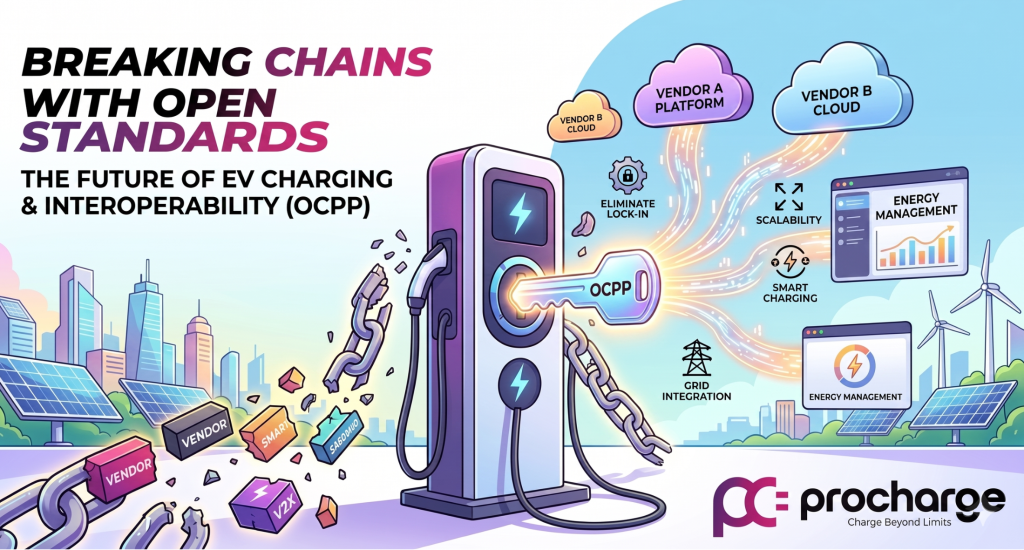
Thankfully, there is a universal key that unlocks this ecosystem: Open Standards & Interoperability, driven primarily by the Open Charge Point Protocol (OCPP).

What is OCPP and Why Should You Care?

At its core, OCPP is a standard application protocol that acts as the universal language between an EV charging station (the hardware) and the central management system (the software backend). Think of it like a USB port for the entire charging industry.

Before OCPP, most charging manufacturers built proprietary systems. Their chargers only talked to their proprietary clouds. If you wanted to switch software providers for better analytics, dynamic pricing, or energy management, you were out of luck.

By demanding interoperable electric vehicle charging stations that are OCPP-compliant, you divorce the hardware from the software. A charger from Vendor A can be managed seamlessly by a platform from Vendor B. This simple change shifts the power dynamic from the manufacturer back to the network operator.

The Business Case for Interoperability

Adopting open standards isn’t just a technical decision; it is a critical financial strategy for anybody building a future-proof EV charging infrastructure. Here is how it pays off:

1. Eliminating Vendor Lock-In

The primary benefit of OCPP compliance is freedom. It gives you the flexibility to choose the best hardware for your site without worrying about being held hostage by limited or expensive backend software later. If your software provider fails to provide adequate support, you can migrate your existing chargers to a competitor without losing your hardware investment.

2. Scalability and Innovation

A networked approach ensures that your infrastructure can grow with the market. As new “smart” features emerge—such as Vehicle-to-Grid (V2X) or advanced diagnostics—an OCPP-compliant backend can deploy these features to all connected, certified hardware, regardless of brand. If you are looking into how does OCPP work for station operators, it is this ability to unify and update a diverse fleet that makes it indispensable.

3. Smart Charging and Grid Integration

Interoperability is essential for smart charging with OCPP. This allows operators to manage energy consumption across multiple stations, balancing the load to avoid expensive peak demand charges from the utility. Open standards ensure that all your chargers, regardless of manufacturer, can participate in these grid-friendly programs.

Conclusion

The EV revolution is well underway, but its foundation must be built on flexibility, not exclusivity. proprietary systems create silos that stymie growth and inflate costs. By prioritizing open charge point protocol benefits, businesses can build resilient networks that survive market shifts.

Don’t get locked into yesterday’s technology. Secure your investment and ensure long-term profitability by demanding OCPP-certified, interoperable solutions.

Ready to future-proof your EV charging network? Contact our specialists today