Overview
India’s EV ecosystem is rapidly evolving. As electric mobility moves from a niche market to mainstream adoption, understanding NEP 2026 & EV charging: how India’s new national electricity policy changes the game is becoming a key factor shaping the future of infrastructure and investment. This topic highlights a major shift in how EV charging is deployed, monetized, and scaled across India, pushing the industry away from fragmented setups toward a standardized, commercially viable, and grid-integrated network.
Business Impact
The regulatory shifts introduced by national policies are entirely redefining the financial landscape for charging point operators (CPOs) and commercial real estate developers. For operators and investors, this means better cost efficiency, new revenue streams, and scalable infrastructure models. By taking advantage of optimized time-of-day (ToD) tariffs and streamlined open-access frameworks, businesses can lower operational expenses and forecast their returns with a much higher degree of accuracy.
Opportunities
The evolving market presents several high-value avenues for B2B growth and network expansion:
-
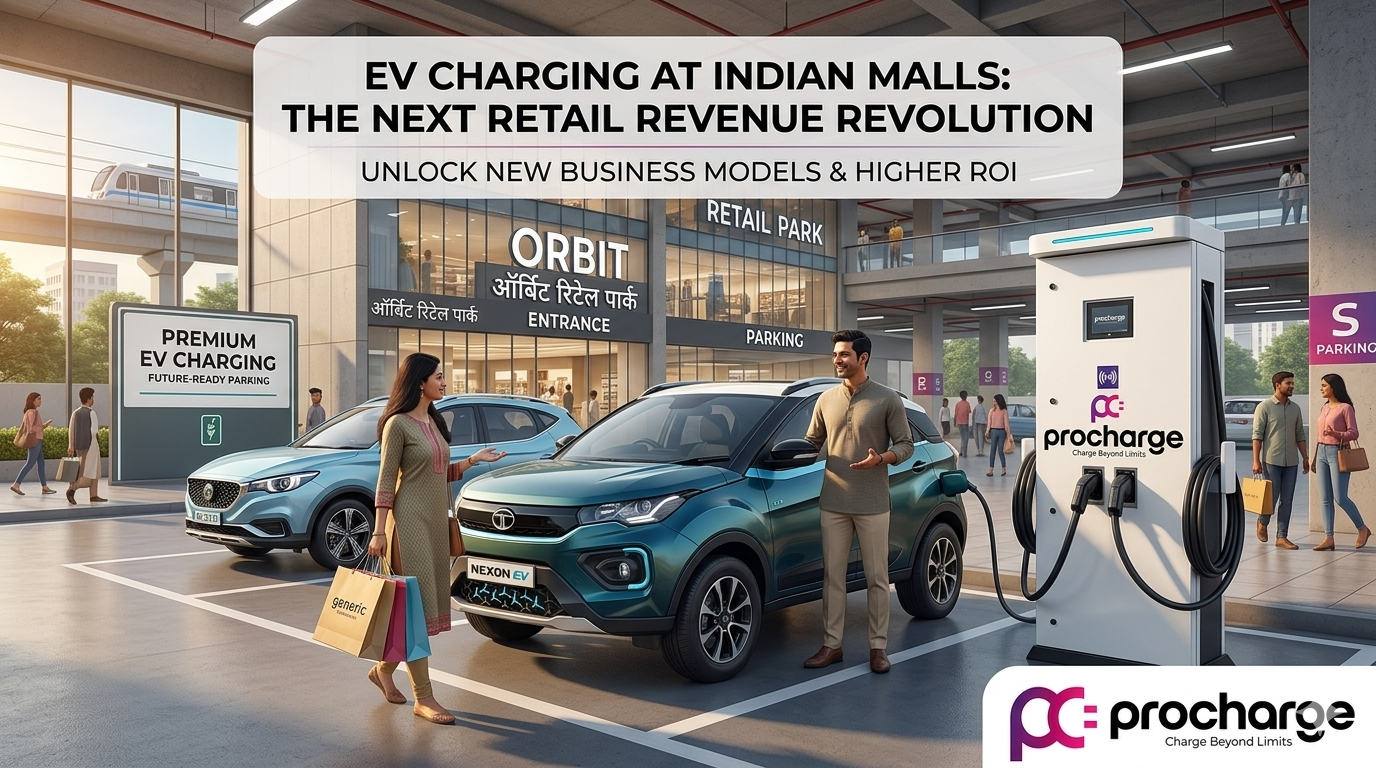
Expansion into high-demand locations: Establishing high-capacity charging hubs in premium urban centers, retail complexes, and along major national highways.
-
Increased ROI potential: Utilizing smart-grid integrations and diversified monetization strategies to maximize utilization rates and accelerate break-even timelines.
-
Strategic partnerships with property owners: Collaborating with commercial real estate developers to install charging facilities as a premium, value-adding asset rather than a simple afterthought.
Challenges
Despite the immense potential, deploying a massive charging network is not without its hurdles. Operators must strategically navigate:
-
Policy variations across states: Adapting to the lack of uniform regulations, subsidies, and compliance standards across different regional jurisdictions.
-
Infrastructure investment costs: Managing the high initial capital expenditure (Capex) required for heavy-duty electrical upgrades, transformers, and fast-charging hardware.
-
Grid and DISCOM coordination: Overcoming technical bottlenecks and bureaucratic delays when securing load approvals and upgrading grid connectivity.
Comparison: The Evolution of Infrastructure
Traditional vs Modern EV Charging Models show clear advantages in flexibility, pricing, and scalability. While older models relied on basic hardware, isolated operations, and flat-rate pricing structures, modern commercial networks utilize intelligent, cloud-connected management systems. These modern systems allow for dynamic load balancing, centralized monitoring, and automated billing, making them vastly superior for large-scale operations.
Key Insights
To succeed in today’s rapidly maturing market, stakeholders must recognize these fundamental truths:
-
EV charging is now a revenue-generating asset rather than just a customer amenity, serving as a primary driver for standalone business models.
-
Early adoption gives long-term advantage, allowing forward-thinking companies to secure prime real estate and capture loyal early-adopter customer bases.
-
Policy support is accelerating growth, providing the necessary backbone and investor confidence for massive nationwide deployment.
Conclusion
The shift toward electrified transport is inevitable, and the regulatory environment is finally aligning with market demands. Businesses that act early will benefit the most from this transition, positioning themselves as authoritative leaders in a highly lucrative, future-proof sector.
Ready to Scale Your Network?
Partner with Procharge to deploy scalable EV charging infrastructure. Visit procharge.in today to connect with our experts, explore smart solutions, and build a network designed for the future of Indian mobility.