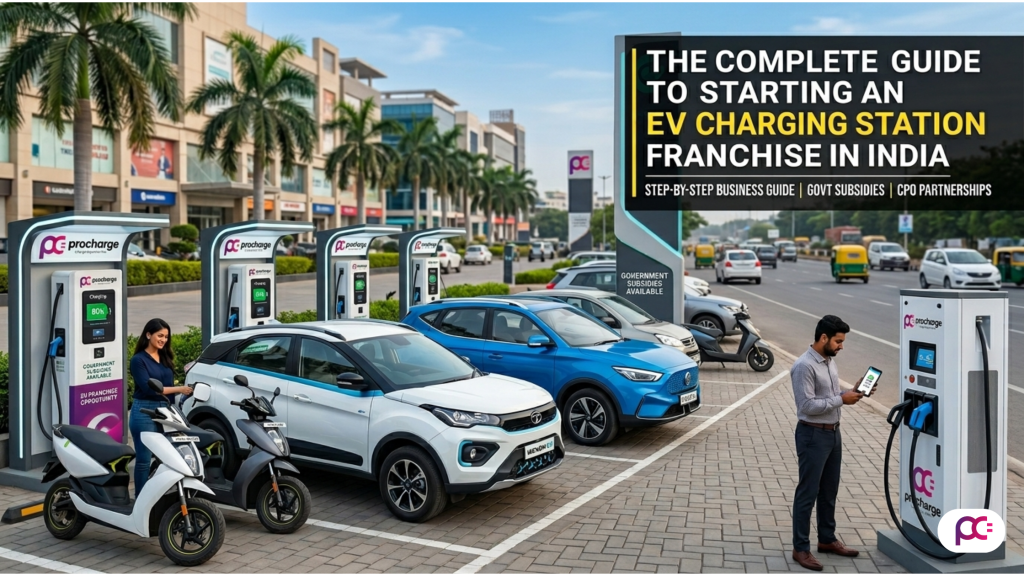
The Complete Guide to Starting an EV Charging Station Franchise in India

The Complete Guide to Starting an EV Charging Station Franchise in India

India is standing at the precipice of a massive mobility revolution. The silent hum of electric vehicles (EVs) is becoming louder on our streets every day. But as more Indians switch to electric cars and two-wheelers, a critical question arises: where will they all charge?

The demand for reliable charging infrastructure is skyrocketing, and this has created one of the most exciting, high-growth investment opportunities in the country. Starting an EV charging station franchise in India is no longer just a futuristic concept; it is a viable, sustainable, and highly profitable business venture today. If you are looking to enter this booming sector, you are in the right place. This guide will walk you through the essential steps to turn this opportunity into a successful reality, leveraging the massive push from EV charging station government subsidies.
Step-by-Step Guide to Launching Your Franchise

Launching an EV charging business requires careful planning and execution. The market is structured differently from traditional fuel retail, demanding a unique approach to location, technology, and partnerships

1. Strategic Site Selection

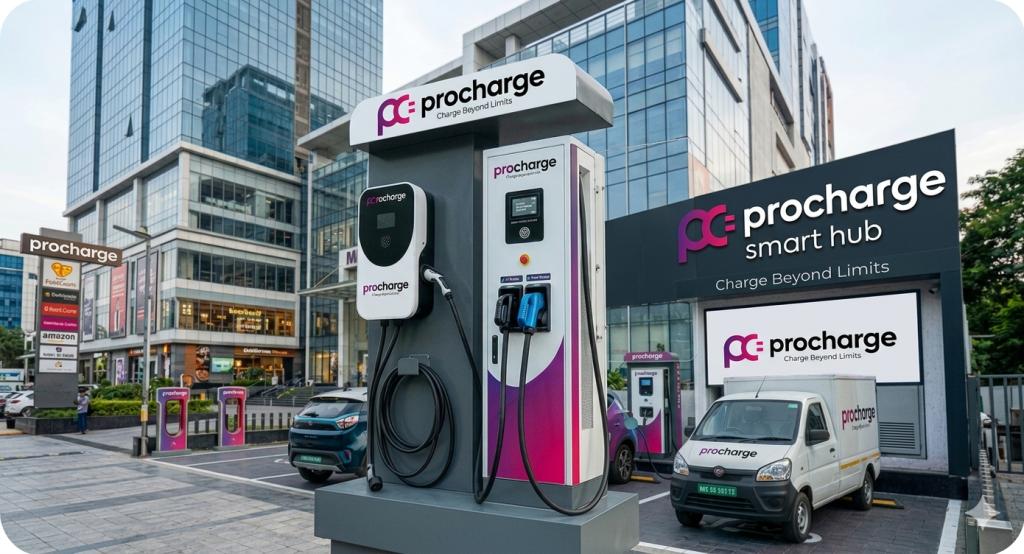
Location is the single most important determinant of your success. Unlike conventional petrol pumps, EVs require users to dwell for 30 minutes to an hour (or longer, depending on the charger). Your site must serve a need. The cost of setting up EV charging station in India is significantly influenced by the existing electrical infrastructure at the site.

Ideal locations fall into three main categories:

  1. High-Traffic Public Spaces: Malls, multiplexes, office complexes, and large residential societies. These cater to the opportunity charging segment.

  2. Highways and Intercity Routes: Essential for enabling long-distance EV travel. These sites require high-speed DC Fast Chargers.

  3. Captive Locations: Partnering with fleet operators (like BluSmart or Uber) or delivery hubs where vehicles park overnight.

Ensure your chosen site has sufficient space for vehicle ingress/egress and is visible. More importantly, verify that the site can support the high electrical load for EV charging station installations, or that the local DISCOM (Distribution Company) can provide the necessary upgrade.

2. Choosing the Right EV Charging Equipment

Your choice of hardware will define your customer base and your revenue model. You must invest in robust, certified, and future-proof EV charging equipment.

There are two primary categories of chargers:

  • AC Chargers (Slow/Moderate): Ideal for locations where vehicles park for longer durations (3–8 hours), such as residential societies, workplaces, or overnight parking. These are less expensive to install and gentler on the grid.

  • DC Fast Chargers: These are the backbone of highway charging and public hubs. They can charge an EV to 80% in 45-60 minutes. While the initial capital expenditure (CapEx) for DC chargers is much higher, they offer faster vehicle turnaround and higher revenue potential per session.

     For a viable franchise, a mix of both types often works best, catering to different user needs at a single location.

3. Navigating Permits and Government Regulations

Historically, setting up a charging station was legally complex. Fortunately, the Government of India has streamlined this process. Today, “Setting up a Public Charging Station (PCS) shall be a de-licensed activity,” provided you meet the performance and safety standards set by the Ministry of Power (MoP) and the Central Electricity Authority (CEA).

However, you still need to secure specific permissions:

  • Power Connection: The primary permit is the high-tension (HT) or low-tension (LT) connection from your local DISCOM, specifically for EV charging use.

  • Safety & Fire: You must obtain a No Objection Certificate (NOC) from the local fire department and ensure all electrical installations meet Bureau of Indian Standards (BIS) and safety protocols.

  • Local Municipal Permits: Civil work, signage, and land-use permits from local civic bodies are required.

Maximizing Profitability: Subsidies and CPO Partnerships

The economics of a charging station improve dramatically when you leverage government support and choose the right operational model.

The Government of India is heavily incentivizing this infrastructure. Initiatives like FAME II (Faster Adoption and Manufacturing of Hybrid and Electric Vehicles) and the recently discussed PM E-Drive scheme (aiming to expand charging networks) provide substantial EV charging station government subsidies. These can cover a significant portion of the hardware costs, provided your station meets specific public accessibility and upstream infrastructure requirements.
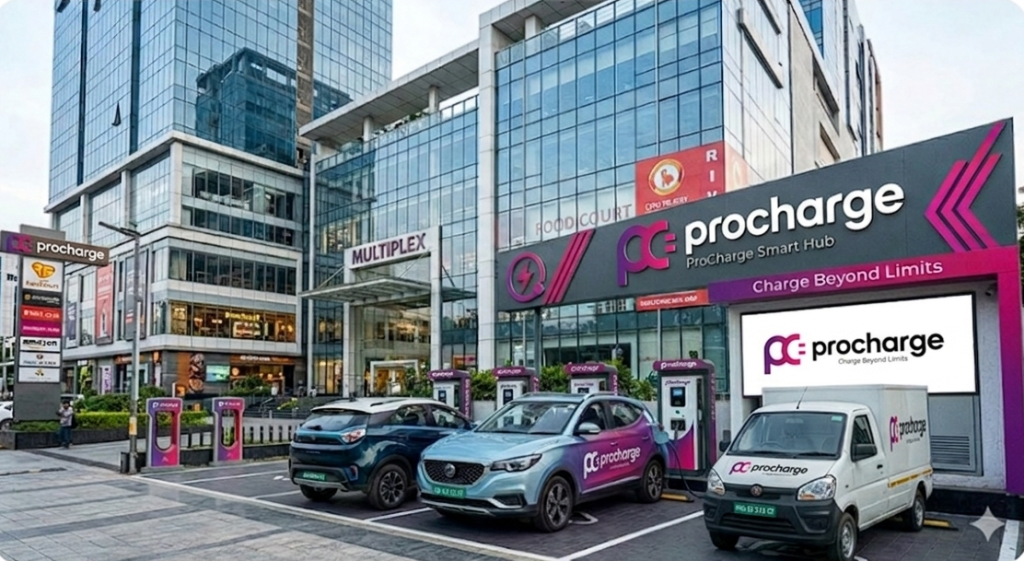
When evaluating a franchise, ask about the available capital subsidies (CapEx support) or operational incentives (like concessional electricity tariffs).

The Power of Partnering with a CPO

To run a compliant and profitable station, you must connect your hardware to a robust software backend. This is where a Charge Point Operator (CPO) comes in. While you own the franchise, the CPO provides the technology that makes the business work.

A strong CPO partnership (like ProCharge) offers three vital benefits:

  1. Software Stack: A comprehensive management platform that handles user authentication, energy billing, tariff management, and real-time remote monitoring of all charger health.

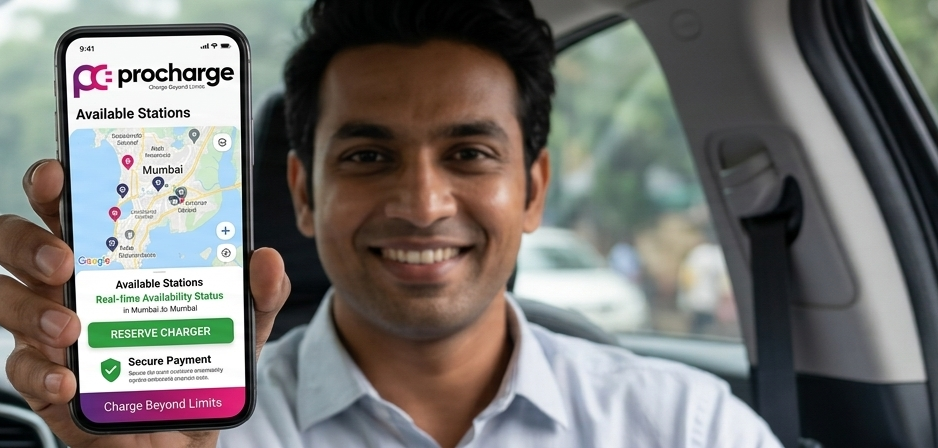
  2. User App: An integrated mobile app that allows drivers to locate your station, reserve a charger, initiate a session, and pay seamlessly. This is crucial for best EV charging station franchise models.

  3. Network Visibility: CPOs integrate your station into larger navigation maps and aggregation platforms, driving traffic to your location. Without CPO integration, your station is invisible.

Selecting the right CPO partner is as critical as selecting your location. You need a partner that offers proven uptime, 24/7 technical support, and flexible revenue-sharing models.

Conclusion: Charge Into the Future

The EV market in India has passed its inflection point. The infrastructure deficit is the only bottleneck remaining. By starting an EV charging station franchise in India, you are not just investing in a business; you are building the essential infrastructure that will power India’s clean energy future.

While the requirements—securing the right site, installing certified EV charging equipment, and navigating electrical load for EV charging station approvals—can seem daunting, partnering with an experienced CPO can streamline the process. The presence of significant EV charging station government subsidies further sweetens the investment.

The timing is perfect. The roadmap is clear.