- contact@procharge.in
- Open Hours : Mon - Sat 10:00 AM - 06:00 PM
- +91 7010 040 060
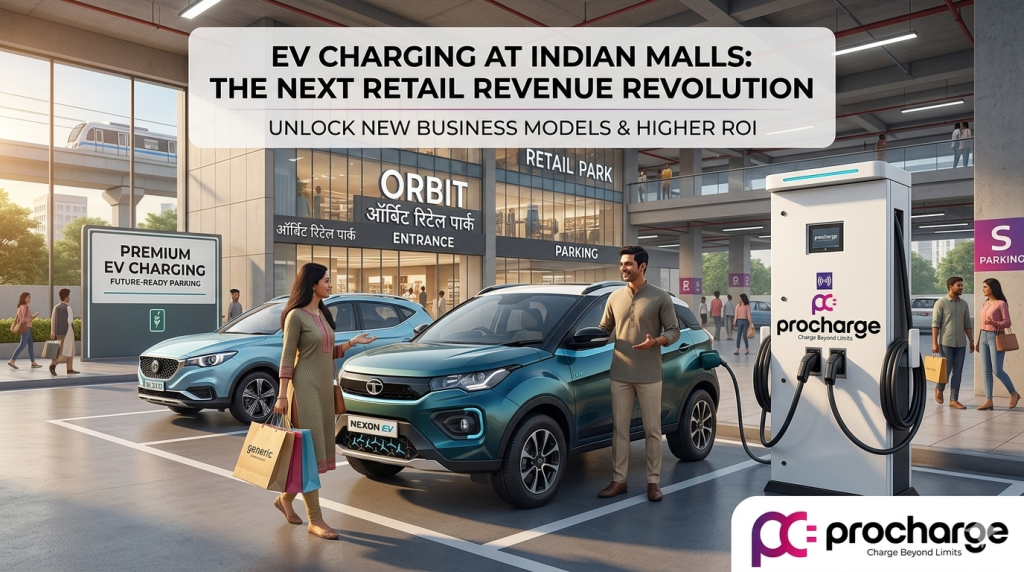
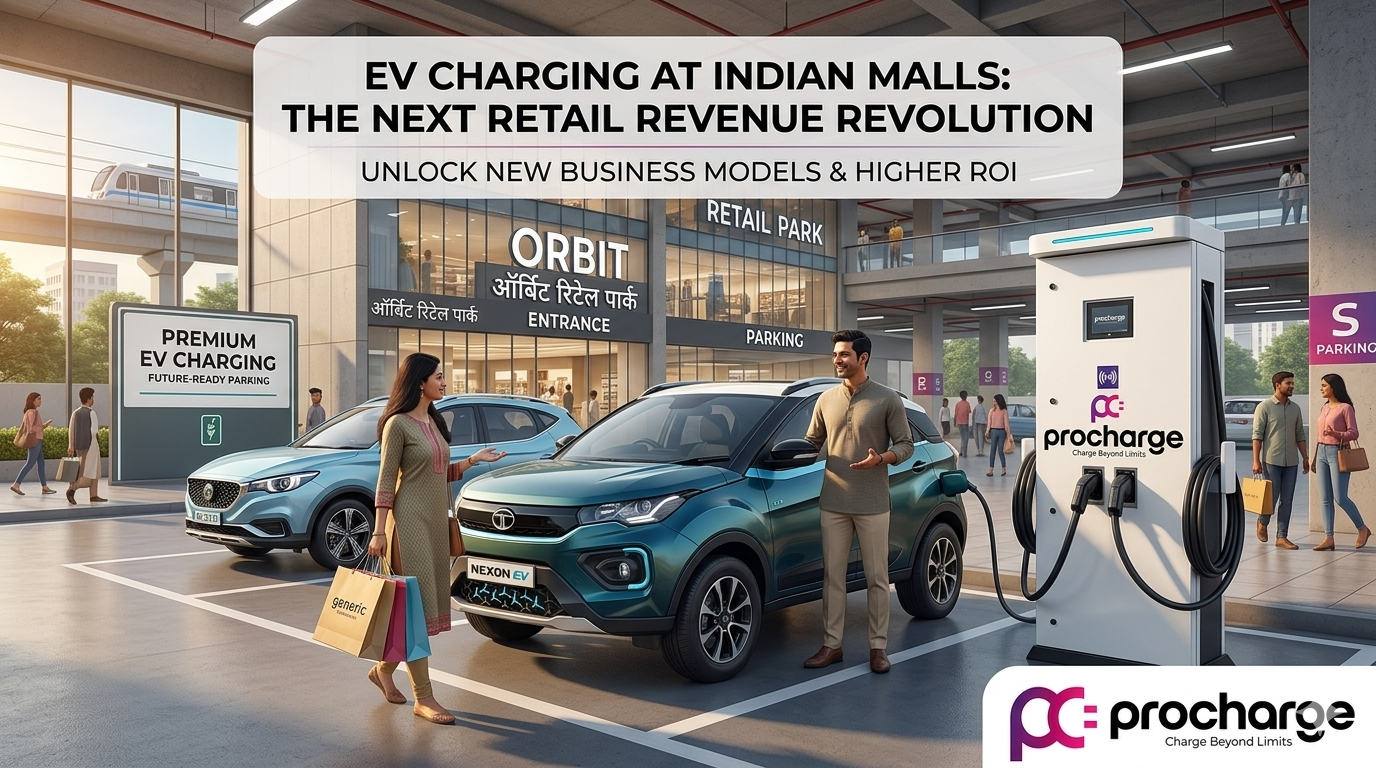
The integration of charging hubs within commercial spaces highlights a major shift in how EV infrastructure is deployed, monetized, and scaled across India. Malls offer the perfect “dwell time” environment; while vehicles charge, owners spend time shopping, dining, or watching movies, creating a symbiotic relationship between energy needs and retail consumption.
For mall operators and investors, transitioning to an EV-friendly model offers significant advantages:
Cost Efficiency: Integrated installations often allow for shared electrical infrastructure and streamlined maintenance.
New Revenue Streams: Beyond parking fees, charging services provide a direct source of income.
Scalable Models: Owners can start with a few bays and expand as footfall from EV owners increases.
Increased Footfall: Charging stations act as a “magnet” for high-spending demographics who own electric vehicles.
The move toward mall-based charging presents several avenues for growth:
High-Demand Locations: Property owners can capture market share by securing “charging deserts” in prime urban areas.
Increased ROI: Charging infrastructure enhances the overall valuation of the retail property.
Strategic Partnerships: Collaborative models between property owners and CPOs (Charge Point Operators) allow for shared risk and reward.
Despite the momentum, property owners must manage several complexities:
Policy Variations: Regulatory requirements and incentives can differ significantly across various Indian states.
Initial Capital Expenditure: High-speed DC chargers require substantial upfront investment.
Grid Coordination: Ensuring the local DISCOM (Distribution Company) can support the increased load is a critical technical hurdle.
| Feature | Traditional Models | Modern Mall-Based Models |
| Primary Goal | Basic Utility/Transit | Revenue Generation & Experience |
| Scalability | Limited by Space | High Flexibility & Modular Growth |
| Pricing | Often Fixed/Flat | Dynamic & Integrated with Loyalty |
| User Experience | Functional/Transactional | Lifestyle-Integrated |
Asset Monetization: EV charging has transitioned from a cost center to a revenue-generating asset.
First-Mover Advantage: Early adoption provides a long-term competitive edge in tenant and customer retention.
Accelerated Growth: Proactive policy support and government mandates are making this transition faster than ever.
The convergence of retail and green mobility is inevitable. Businesses that recognize this shift and act early will benefit the most from this transition, securing their place in the future of the Indian retail landscape.
to deploy scalable EV charging infrastructure and future-proof your retail property today.
The integration of charging hubs within commercial spaces highlights a major shift in how EV infrastructure is deployed, monetized, and scaled across India. Malls offer the perfect “dwell time” environment; while vehicles charge, owners spend time shopping, dining, or watching movies, creating a symbiotic relationship between energy needs and retail consumption.
EV chargers for business, mall operators and investors, transitioning to an EV-friendly model offers significant advantages:
Cost Efficiency: Integrated installations often allow for shared electrical infrastructure and streamlined maintenance.
New Revenue Streams: Beyond parking fees, charging services provide a direct source of income.
Scalable Models: Owners can start with a few bays and expand as footfall from EV owners increases.
Increased Footfall: Charging stations act as a “magnet” for high-spending demographics who own electric vehicles.
The move toward mall-based charging presents several avenues for growth:
High-Demand Locations: Property owners can capture market share by securing “charging deserts” in prime urban areas.
Increased ROI: Charging infrastructure enhances the overall valuation of the retail property.
Strategic Partnerships: Collaborative models between property owners and CPOs (Charge Point Operators) allow for shared risk and reward.
Despite the momentum, property owners must manage several complexities:
Policy Variations: Regulatory requirements and incentives can differ significantly across various Indian states.
Initial Capital Expenditure: High-speed DC chargers require substantial upfront investment.
Grid Coordination: Ensuring the local DISCOM (Distribution Company) can support the increased load is a critical technical hurdle.
| Feature | Traditional Models | Modern Mall-Based Models |
| Primary Goal | Basic Utility/Transit | Revenue Generation & Experience |
| Scalability | Limited by Space | High Flexibility & Modular Growth |
| Pricing | Often Fixed/Flat | Dynamic & Integrated with Loyalty |
| User Experience | Functional/Transactional | Lifestyle-Integrated |
Asset Monetization: EV charging has transitioned from a cost center to a revenue-generating asset.
First-Mover Advantage: Early adoption provides a long-term competitive edge in tenant and customer retention.
Accelerated Growth: Proactive policy support and government mandates are making this transition faster than ever.
The convergence of retail and green mobility is inevitable. Businesses that recognize this shift and act early will benefit the most from this transition, securing their place in the future of the Indian retail landscape.
to deploy scalable EV charging infrastructure and future-proof your retail property today.
WhatsApp Us