1. Electricity Tariff Rates
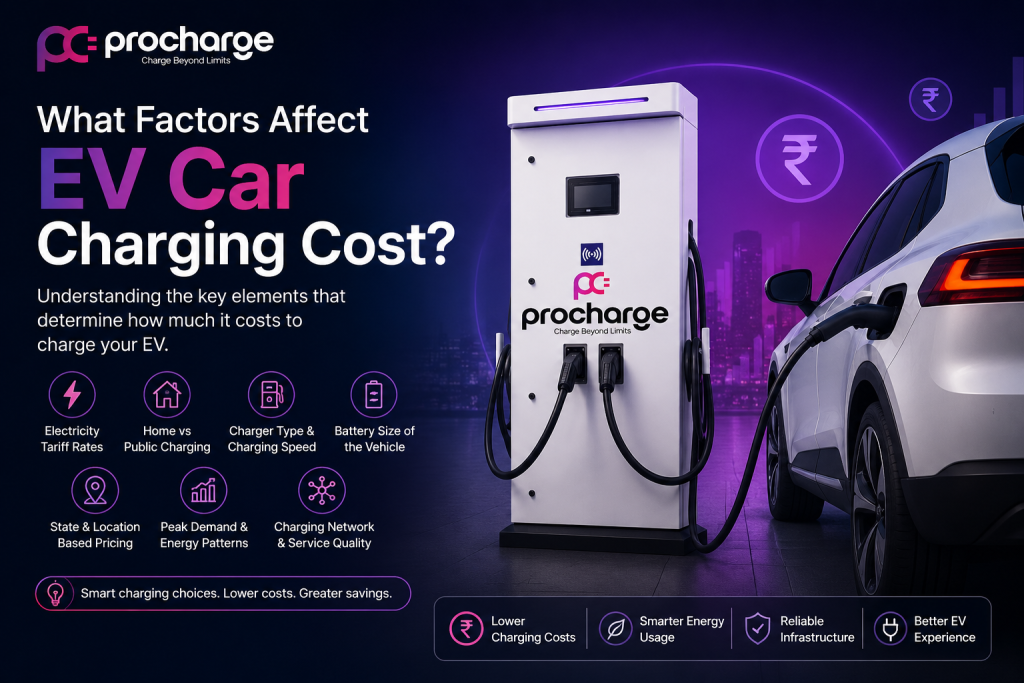
The biggest factor influencing EV car charging cost is the electricity rate charged per unit (kWh). Electricity prices vary across states, cities, and utility providers.
For example, charging an EV at home in Tamil Nadu may cost differently compared to Karnataka or Maharashtra due to varying residential electricity tariffs. Commercial charging stations may also apply different rates depending on their operating costs and energy procurement agreements.
The lower the electricity tariff, the lower the overall charging cost.
2. Home Charging vs Public Charging
Where you charge your EV plays a major role in determining charging expenses.
Home Charging
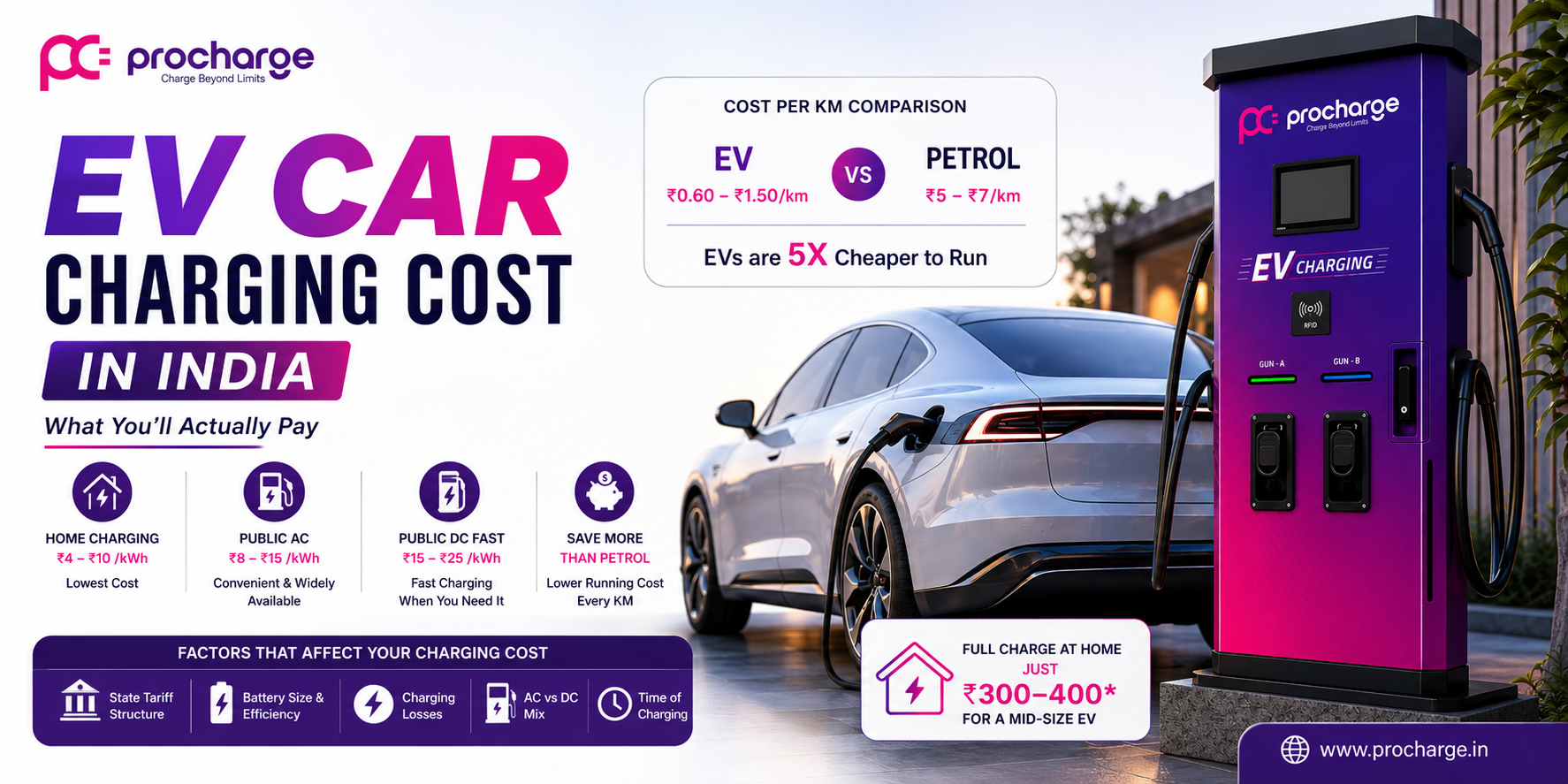
Home charging is usually the most economical option because it uses residential electricity rates. Most EV owners charge overnight, benefiting from convenience and lower operating costs.
Public Charging Stations
Public charging stations provide accessibility and faster charging options but often include additional operational expenses such as infrastructure maintenance, software management, network connectivity, and customer support.
As a result, public charging rates are generally higher than home charging rates.
At ProCharge, our focus is to provide reliable and accessible charging infrastructure while ensuring transparent pricing for EV drivers.
3. Charging Speed and Charger Type
Not all chargers are created equal.
AC Chargers
AC chargers are commonly used for home and workplace charging. They deliver power at a slower rate and usually result in lower charging costs.
DC Fast Chargers
DC fast chargers provide rapid charging, making them ideal for highways, commercial locations, and fleet operations. However, the convenience and infrastructure investment associated with fast charging can influence the charging price.
In many cases, faster charging services may have higher rates compared to standard charging solutions.
4. Battery Size of the Vehicle
The battery capacity of an EV directly affects the total charging cost.
For example:
- A 20 kWh battery requires less energy to fully charge.
- A 50 kWh battery requires significantly more electricity.
- Larger premium EVs with 75 kWh or 100 kWh batteries naturally incur higher charging expenses.
While larger batteries offer longer driving ranges, they also require more energy during charging sessions.
5. State and Location-Based Pricing
Charging costs can vary depending on where the charging station is located.
Factors that influence location-based pricing include:
- Local electricity tariffs
- Demand charges from utilities
- Commercial property costs
- Grid infrastructure availability
- Urban versus rural operating expenses
High-demand metropolitan areas may experience different charging economics compared to smaller cities and towns.
6. Peak Demand and Energy Consumption Patterns
Energy demand fluctuates throughout the day.
During peak electricity usage periods, energy procurement costs for charging operators may increase. Some charging networks optimize pricing structures based on demand patterns and operational efficiency.
As India’s EV ecosystem grows, smart energy management and load balancing technologies will play an important role in controlling EV charging costs.
7. Charging Network and Service Quality
Different charging networks offer varying levels of service quality, station reliability, mobile app integration, customer support, and network coverage.
A professionally managed Charge Point Operator (CPO) invests in:
- Reliable charging hardware
- Remote monitoring systems
- Preventive maintenance
- Secure payment infrastructure
- Network uptime management
These factors contribute to a better charging experience while influencing operational costs.
How to Reduce EV Car Charging Cost
EV owners can reduce charging expenses by following a few simple practices:
- Charge at home whenever possible.
- Avoid unnecessary fast charging sessions.
- Monitor battery health regularly.
- Use charging stations with transparent pricing.
- Plan charging stops efficiently during long trips.
- Take advantage of workplace charging opportunities.
The Future of EV Charging Costs in India
As charging infrastructure expands and renewable energy integration increases, the long-term outlook for EV charging remains highly cost-effective. Advancements in smart charging, energy storage systems, and grid optimization are expected to improve efficiency and affordability further.
For EV owners and businesses alike, understanding the factors affecting EV car charging cost is essential for making informed decisions and maximizing savings.
At ProCharge, we are committed to building a reliable EV charging ecosystem that delivers convenience, transparency, and scalable charging solutions for India’s rapidly growing electric mobility market.