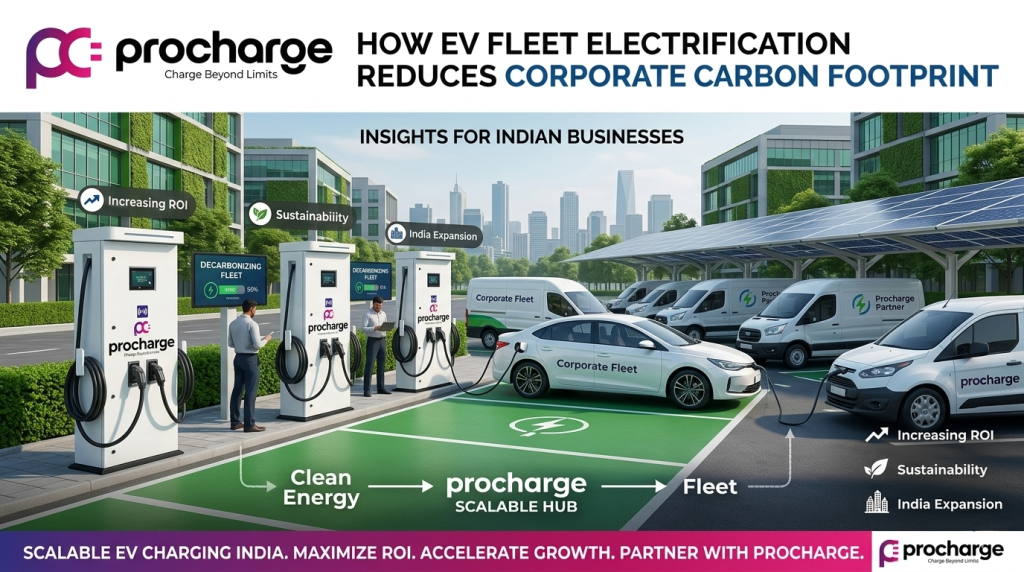
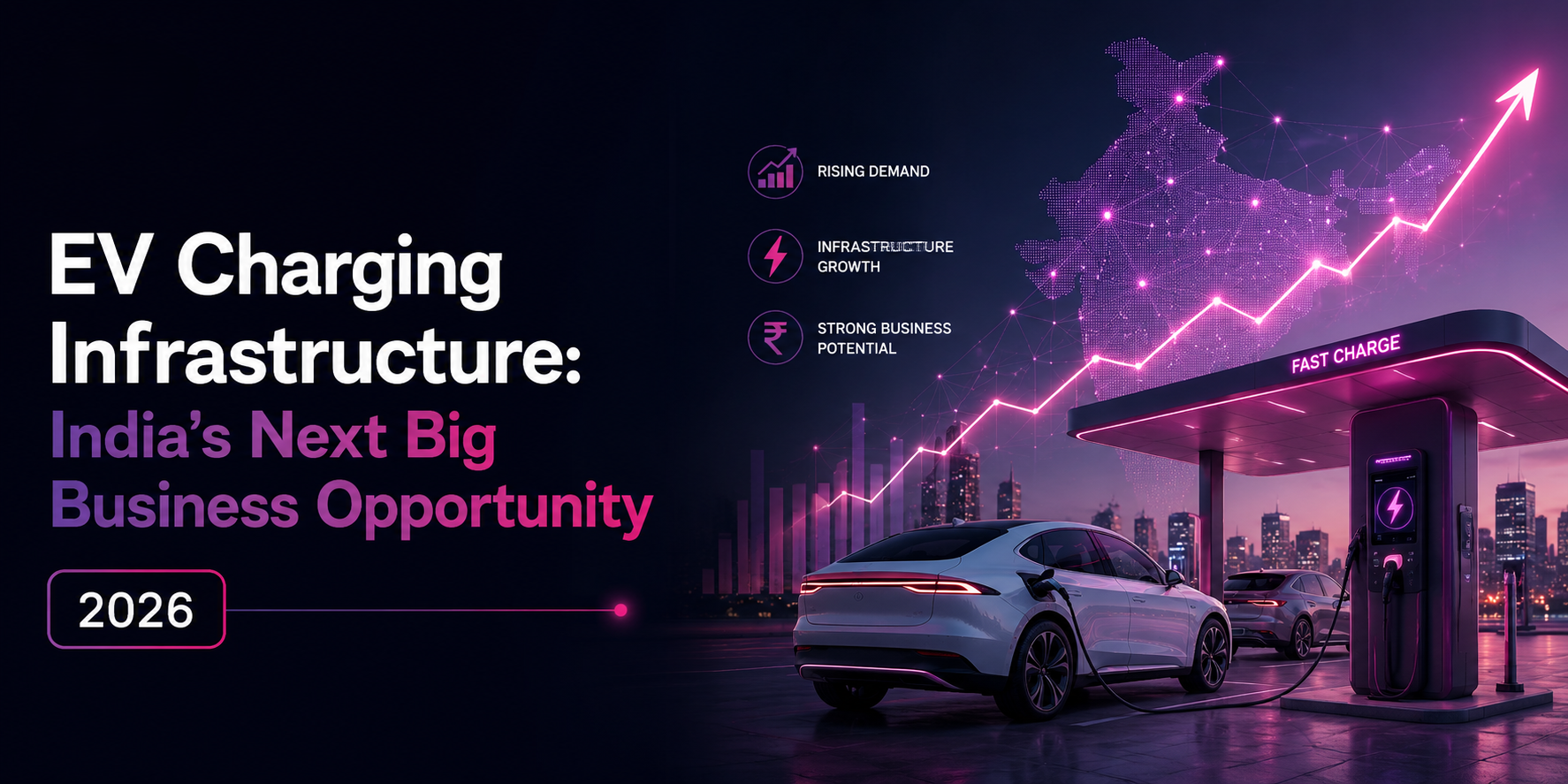
India’s EV ecosystem is rapidly evolving, and understanding how EV fleet electrification reduces corporate carbon footprint is becoming a key factor shaping the future of infrastructure and investment. For corporations striving to meet ambitious Environmental, Social, and Governance (ESG) targets, transitioning from traditional internal combustion engine (ICE) vehicles to electric fleets is a critical strategy. This topic highlights a major shift in how EV charging is deployed, monetized, and scaled across India.
The Business Impact of Electrification
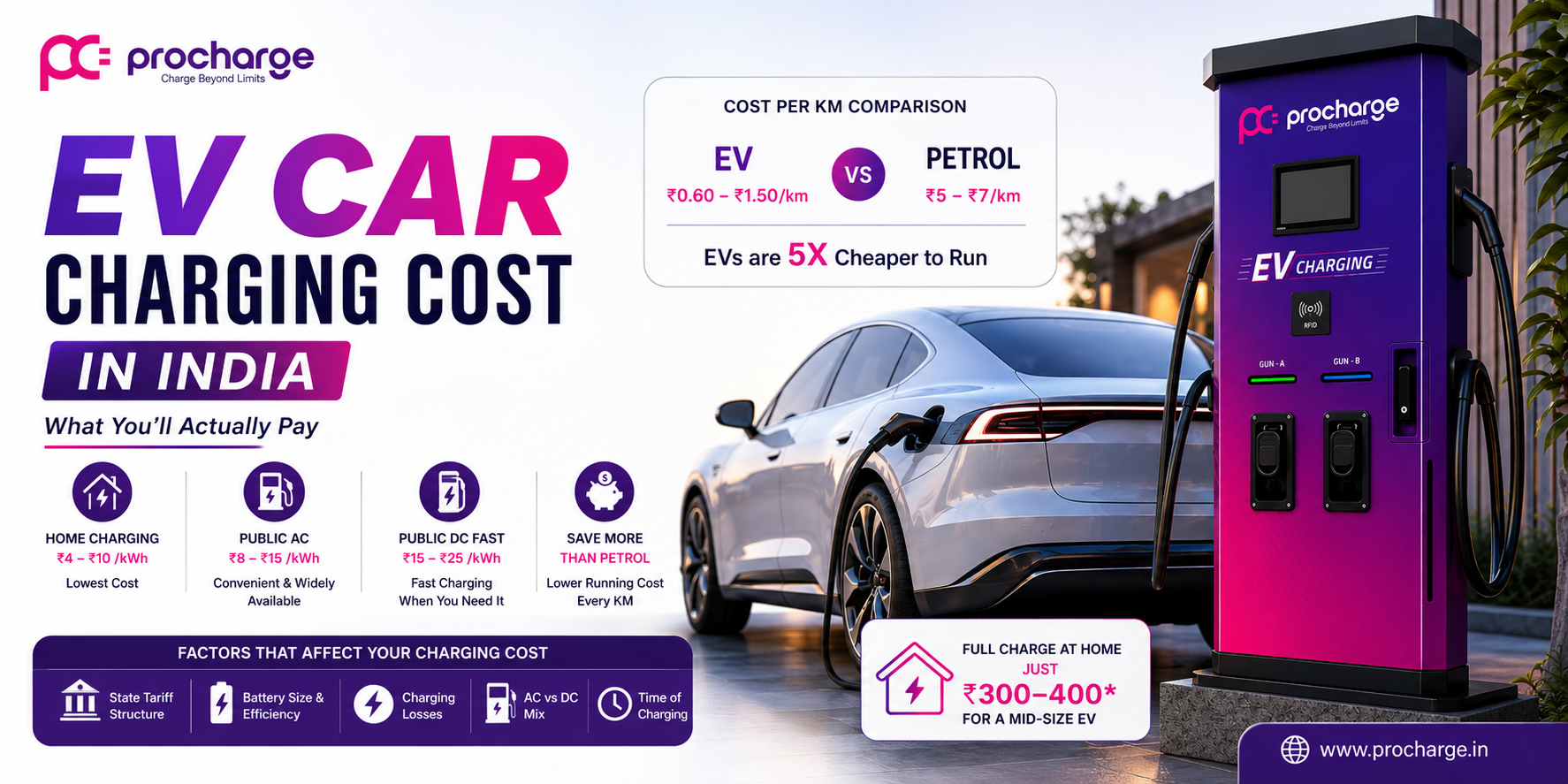
Replacing fossil-fuel-powered commercial vehicles with electric equivalents immediately reduces a company’s direct greenhouse gas emissions. However, the benefits extend far beyond sustainability. For operators and investors, this means better cost efficiency, new revenue streams, and scalable infrastructure models. Because electricity is highly cost-effective per kilometer compared to volatile diesel prices, companies realize massive savings in their daily logistics and employee transit operations.
Opportunities in the EV Sector
Investing in an electric fleet and its corresponding infrastructure unlocks significant commercial advantages. Companies can capitalize on the following opportunities:
Expansion into high-demand locations: Establishing charging networks in commercial hubs, IT parks, and logistics corridors ensures high utilization rates.
Increased ROI potential: Lower fuel and maintenance costs associated with EVs translate to higher long-term profitability.
Strategic partnerships with property owners: Collaborating with commercial real estate developers to install charging infrastructure can turn parking spaces into profitable assets.
Challenges to Consider
While the transition is highly beneficial, businesses must strategically navigate a few systemic roadblocks. These challenges include:
Policy variations across states: Navigating the differing subsidies, tariffs, and EV regulations across various Indian states requires localized strategies.
Infrastructure investment costs: The initial capital expenditure for deploying high-capacity fast chargers and procuring commercial EVs can be substantial.
Grid and DISCOM coordination: Ensuring a stable power supply for fleet depots requires close planning and load-management coordination with local distribution companies.
Traditional vs. Modern EV Charging Models
When evaluating how to power a corporate fleet, the comparison between Traditional vs Modern EV Charging Models show clear advantages in flexibility, pricing, and scalability. Modern, smart-charging setups allow for load balancing, dynamic pricing based on peak hours, and seamless remote monitoring—features that older, “plug-and-play” systems simply cannot match.
Key Insights for Market Leaders
As the Indian market matures, several critical insights are emerging for B2B operators:
EV charging is now a revenue-generating asset: It has evolved past being merely a sunk operational cost.
Early adoption gives long-term advantage: Securing prime locations and locking in early government subsidies builds a competitive moat.
Policy support is accelerating growth: State and central government initiatives continue to aggressively back EV infrastructure development.
Conclusion
The shift toward electric mobility is inevitable for modern enterprises. Businesses that act early will benefit the most from this transition, achieving dual goals of environmental sustainability and robust operational efficiency.
Ready to future-proof your business? Partner with Procharge to deploy scalable EV charging infrastructure. Visit procharge.in today to explore tailored charging solutions for your corporate fleet.